Early Signs Autism is an independent educational site on the early signs of autism, developmental screening, and what parents can do next. Every claim carries its source inline, and pages are re-checked against the primary literature. The full editorial policy is on the about page.
What you can hand to families
- The signs-by-age checklist with a doctor-ready printout. Families work through the age-by-age signs, check what they observe, and print a dated, text-only summary of exactly those observations, no photographs, one sheet, written to be handed across a desk. Concrete observations instead of "I'm worried."
- A step-by-step plan for the worried parent. Next steps covers documenting, asking for screening and referral by name, and self-referring to early intervention, including the exact sentences to say.
- Plain-language pages for every common instrument. When a family arrives holding an ASQ-3, M-CHAT-R/F, ADOS-2 or Vineland report, there is a page for each test explaining what it measures and what a result does and doesn't mean.
- The presentation clinicians most often miss. Autism in girls, the counting gap, masking, and why "fine at school" is not evidence against autism, each with its source.
Twelve sourced graphics, print and screen
All twelve are on the infographics page with embed codes. Each states its sources and survey years on the sheet itself, so it stays accurate wherever it travels. The five most used in clinical conversations:
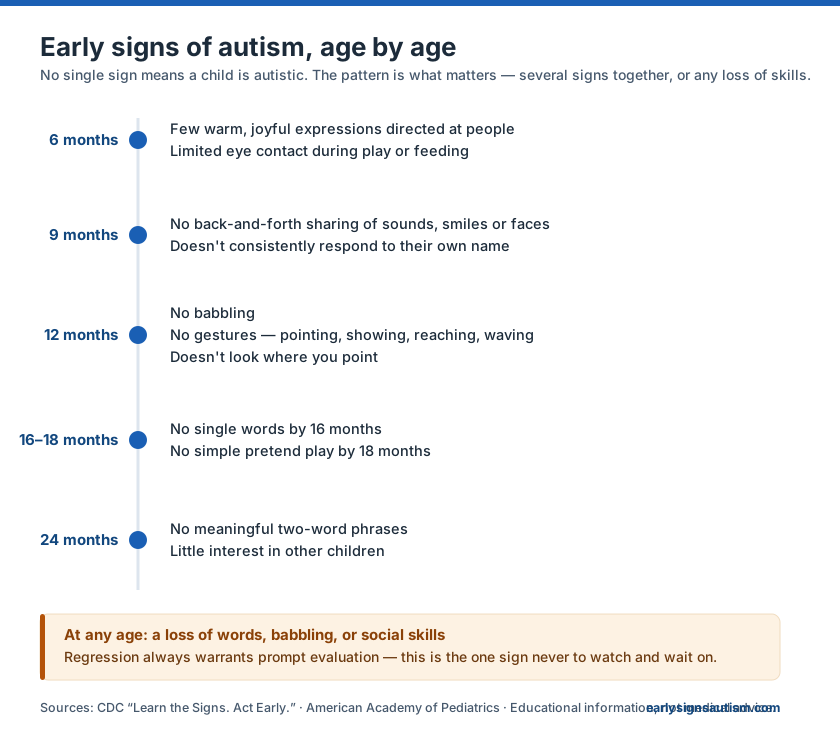
- The signs, 6–24 months, on one timeline, the waiting-room poster candidate
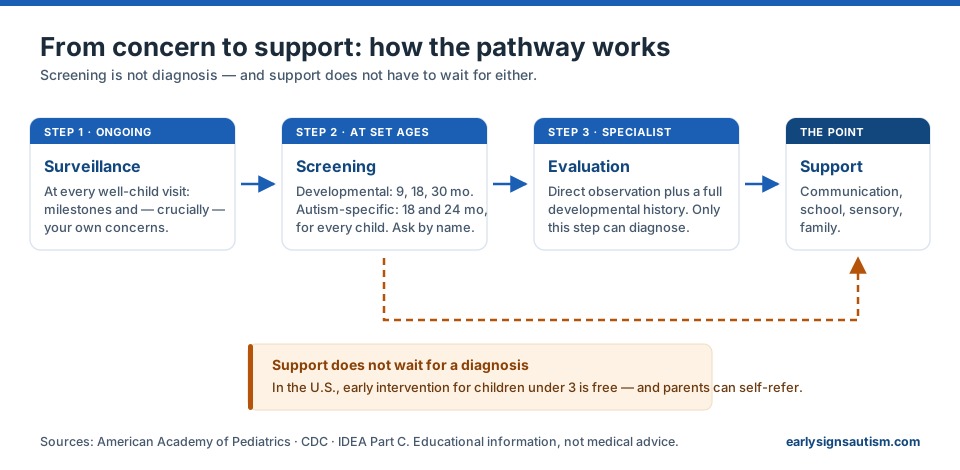
- The screening pathway, surveillance to screening to evaluation, and the dashed line showing support starts without a diagnosis
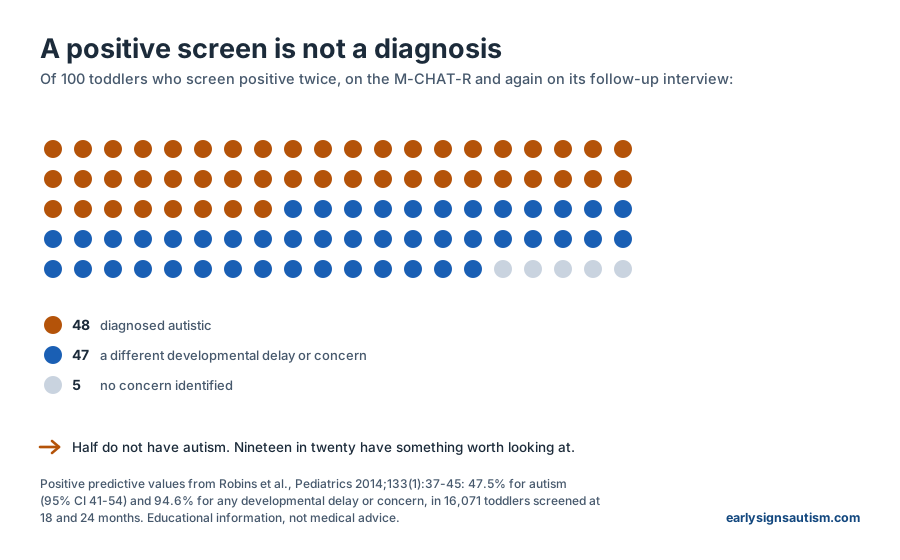
- What a positive M-CHAT really means, 100 children, drawn out; useful against both panic and dismissal
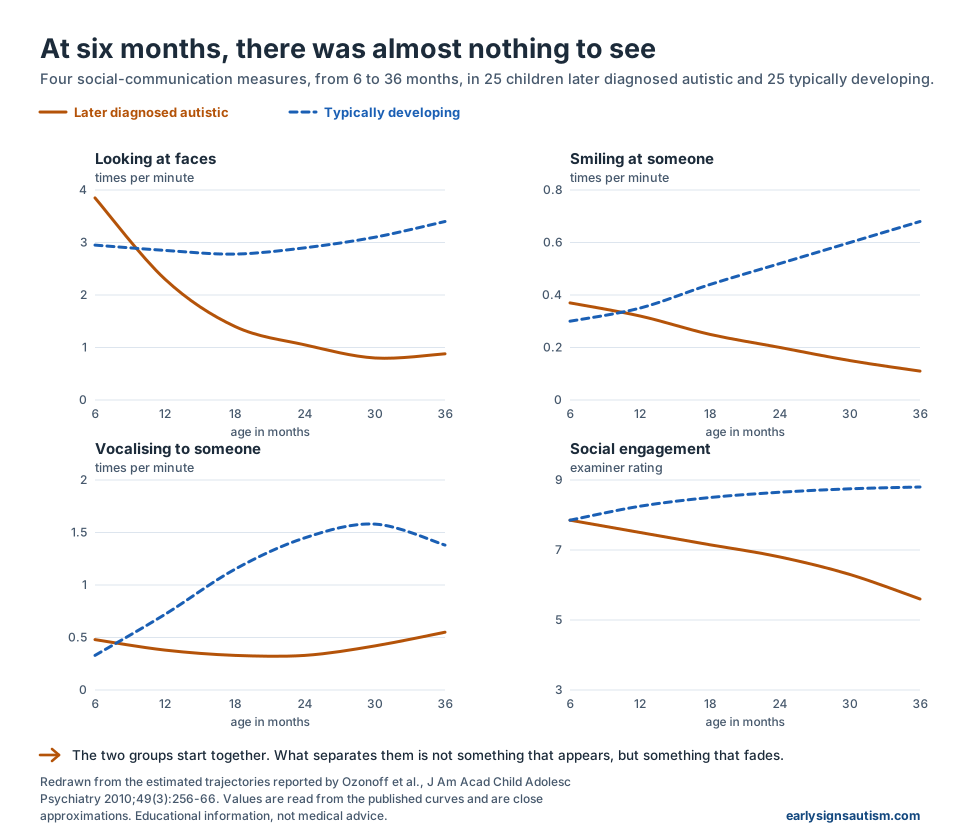
- How the signs emerge, redrawn from the published trajectories
- Sibling recurrence, the numbers for the family that already has an autistic child
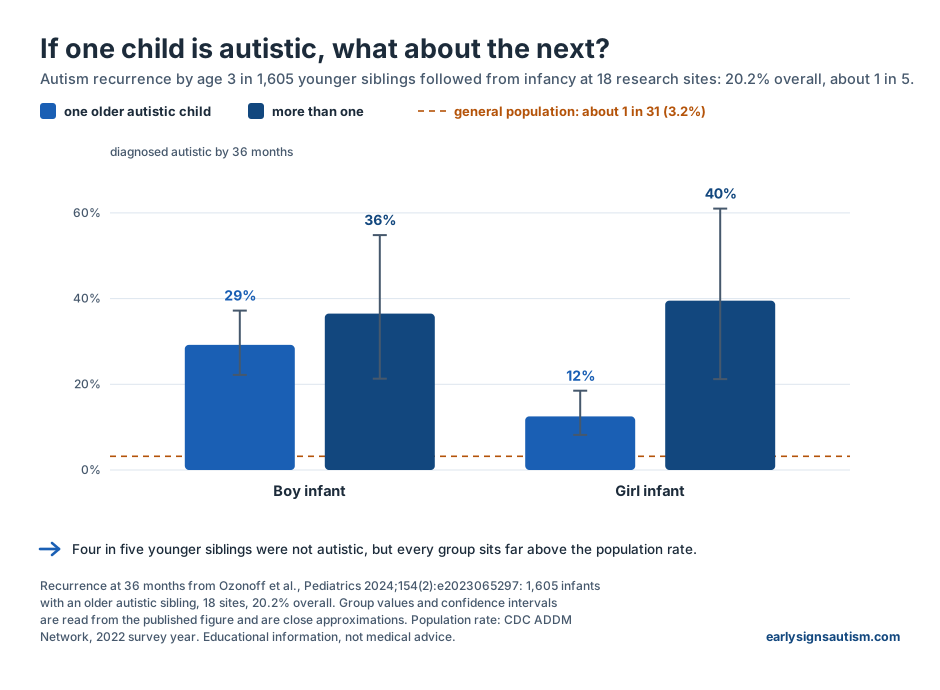
The SVG files print sharply at any size. For a poster, print the SVG directly from the browser rather than a screenshot.
Reuse terms, in one paragraph
Everything on this site, pages, printouts, graphics, is free to reproduce, print, embed and distribute for educational and clinical use. Two conditions: credit earlysignsautism.com (the graphics already carry the attribution on the sheet; leave it in place), and don't alter the data or remove the source lines. No permission request needed, no fees, ever.
Citing this site
Pages state their last-updated date in the header. A citation that works in most styles:
Early Signs Autism. "Early signs of autism, age by age." earlysignsautism.com, last updated August 2026, https://earlysignsautism.com/signs-by-age.
For figures, cite the primary study named on the graphic. The site is the messenger, not the source. Every graphic lists its studies with journal and year on the sheet.
Linking from a resource page
If you maintain a "helpful links" or family-resources page, this snippet describes the site accurately:
<a href="https://earlysignsautism.com">Early Signs Autism</a>,
an evidence-based guide to the early signs of autism, developmental
screening, and next steps for families. Every claim sourced; free
printable checklists.
Accuracy, corrections, contact
Sourcing rules, the correction log, and the numbers-checking process are documented on the about page. Corrections from clinicians are particularly welcome and are made promptly: hello@earlysignsautism.com. If your practice or program would like a graphic adapted (size, language, format) for a specific use, write, if it's feasible, it's free.
The one-line version
Free, sourced parent materials on early autism signs: print them, embed them, link them, credit the site, keep the data intact.